When “Scent” is the Future of the Thai Wellness Economy
เผยแพร่เมื่อ 1 เดือนที่แล้ว
When “Scent” is the Future of the Thai Wellness Economy
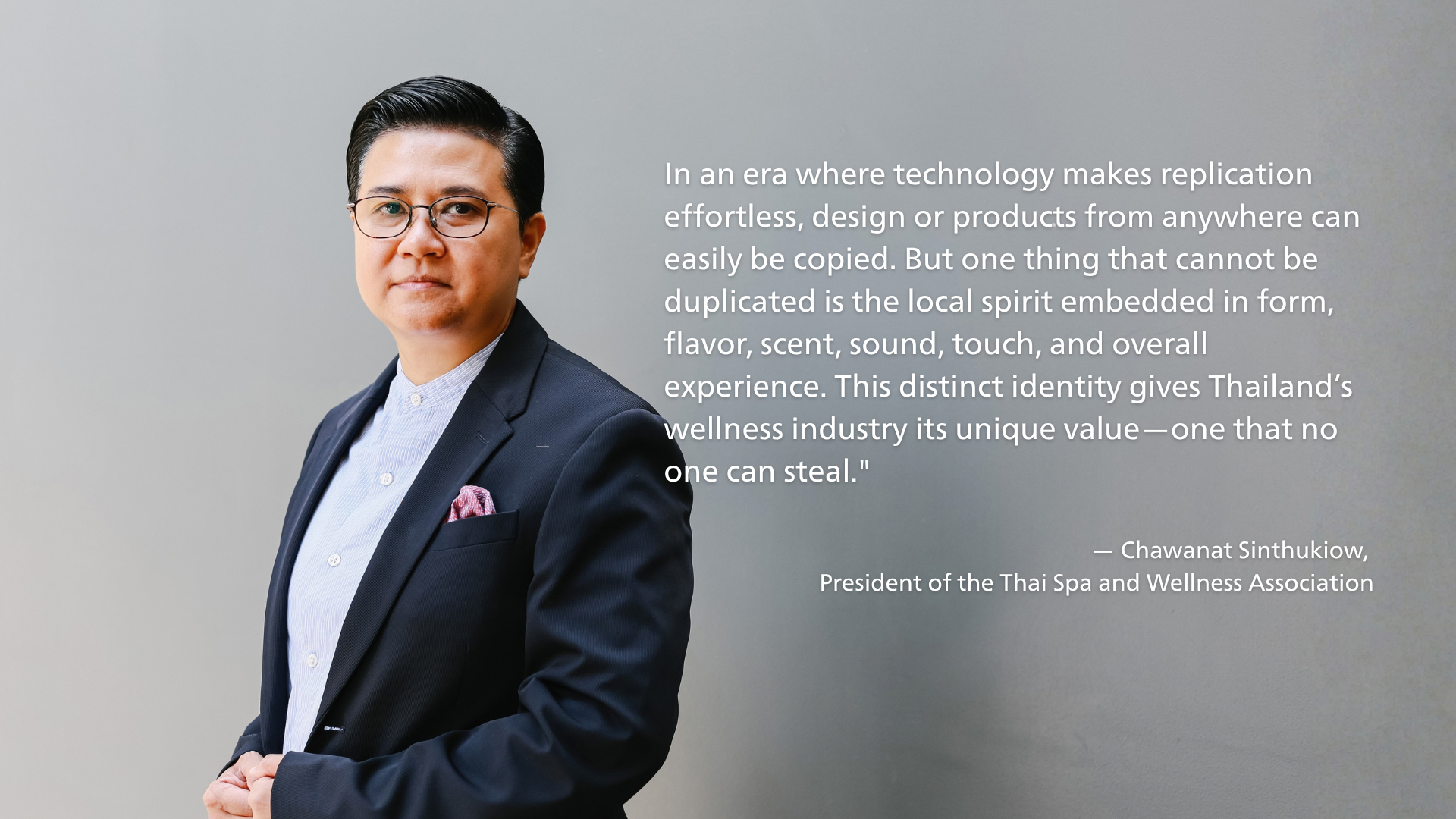
In conversation with Chawanat Sinthukiow, President of the Thai Spa and Wellness Association and exporter of Thai spa to the global market.
In recent years, the Thai wellness market has witnessed remarkable growth. According to data from the Global Wellness Institute, between 2022 and 2024, the market expanded by over 35%, growing from $31.6 billion USD to $42.7 billion USD, positioning Thailand as one of the fastest-growing markets among the top 25 globally. These figures encompass everything from traditional Thai massage and spa businesses to herbal remedies, healthy cuisine, wellness tourism, and natural beauty products—all integral components of an ecosystem Thailand has cultivated for generations.
In a world where AI is rapidly replacing many forms of labor, the wellness industry remains one of the few businesses deeply tied to human connection. Its value relies not on speed or volume, but on human touch, lived experience, delicate craftsmanship, and centuries of accumulated wisdom—culminating in a unique essence that is nearly impossible to replicate.
For Chawanat Sinthukiow, President of the Thai Spa and Wellness Association and a pioneer of Lanna-style spa businesses in Chiang Mai that later expanded internationally, this distinct “scent” did not stem from a generic, ready-made image of Thainess. Instead, it grew naturally from her Northern Thai roots—through herbal aromas, body care rituals, and Lanna philosophy that views health as living in harmony with nature. This heritage was eventually translated into a contemporary Thai spa narrative that resonates with a global audience, establishing a firm foothold on the international wellness stage.
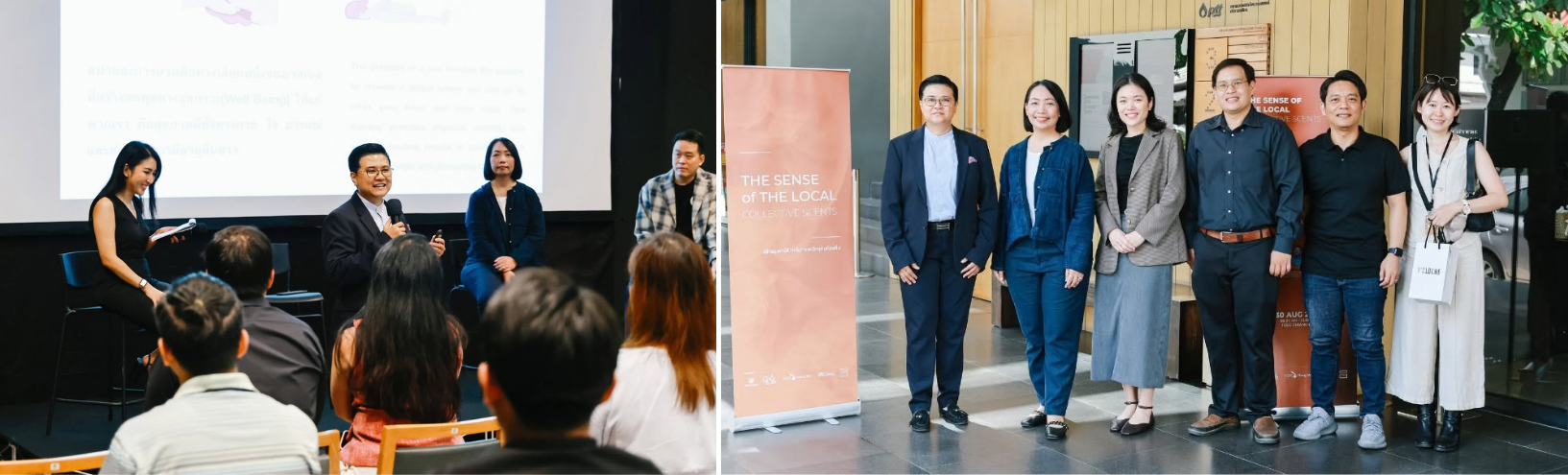
We invited her to share her nearly 30-year journey—from leveraging Northern cultural capital to craft a language of wellness, introducing Thai service craft to international markets, to her current role as President of the Thai Spa and Wellness Association, driving the industry toward global growth.
When speaking of Thai wellness, many people immediately picture traditional Thai massage, herbs, or herbal compresses as ancient wisdom. However, the spa business you initiated in the 2000s explicitly integrated Lanna identity, leading to the widespread Lanna-style spa phenomenon we see today. What was the original inspiration behind this concept?
Looking back to that time, the word “spa” was a very new concept in Chiang Mai. There was only Four Seasons Resort and one other small spa operator. Having a family golf course business, I thought we should have a spa in our clubhouse. So, I reached out to a major spa brand in Phuket to open a branch. That was my entry into the spa industry. We operated with that brand until the contract expired, at which point I thought we should create our own spa brand under the name “Angsana Spa” and weave local Lanna identity into the guest experience.
Back then, were there no Lanna-style spas yet?
Most were more Oriental or Asian in style. Some might have used local herbs or decor accents, but Angsana Spa was among the pioneers to deeply incorporate Lanna art, architecture, handicrafts, music, ambiance, herbs, ingredients, and even staff attire to create a genuine Lanna experience. We viewed all of this as the “scent” of Lanna—an identity tied to history, the city, and the feelings felt by guests.
What exactly is the “scent” of Lanna?
Tangibly, it is the fragrance of Northern flowers—the gentle aroma of Kasalong (cork tree flower) or orchids, the cool softness of Gardenia or White Ginger Lily, as well as local herbs, spices, turmeric, lemongrass, Ma-khaen (wild pepper), and the nature of the North. Intangibly, it is the aroma emanating from Lanna’s rich cultural capital, which lives not only in aromatherapy, but in food, arts and crafts, way of life, language, the relaxed pace (Ta-Ton-Yon), serenity, and delicate spirit of Northern people.
We didn’t want to sell just a scent; we wanted to sell stories and experiences. People coming to Chiang Mai don’t remember just a single fragrance—they remember the entire composition, from the polite word “Jao” and the gentle manner of speech to the feeling of restful peace and the surrounding nature. Together, these elements form the scent of Lanna—an experience the global market is seeking.
I understand that shortly after opening Saban-nga Spa in Chiang Mai, investors invited you to expand overseas. Was that because of the Lanna charm you mentioned?
Not entirely. When foreigners first see it, they might feel that Lanna identity looks exotic. But once they truly experience it, we believe it comes down to the sense of refinement. The first country we opened in was Azerbaijan, followed by Russia and several cities in China.
Back in the early 2000s, Lanna identity was very new—both to us and to foreigners. Many might have seen pictures of Lanna art, temples, or architecture, but experiencing a spa service was a whole new dimension. Our opportunities to expand abroad mostly began with local businesspeople visiting Chiang Mai, having a wonderful experience, and inviting us to establish a presence in their home countries.
Operating a Thai spa in contexts where people knew little about Thailand, how did you have to adapt?
We had to adapt a lot. At that time, some people there didn’t even know Thailand, though they knew Bangkok. Therefore, we couldn’t just drop Thainess into that setting without considering the local context. We had to understand what their customers were accustomed to, what they needed, and what standards they expected.
We started in Baku, Azerbaijan. Back then, we ran it as a private club rather than a walk-in spa; members entered through a membership system. We had to blend Thai products with familiar international products—such as certain European skincare brands—to build their confidence. At the same time, we retained Thai touches, a Thai menu, Thai-style hospitality, and the Lanna soul at its core.
We had 14 treatment rooms. Twelve were designed around the 12 zodiac signs, connecting elements with Lanna folklore. The other two were Sukhothai and Ayutthaya rooms. Even the zodiac signs required adaptation—in a Muslim context, the Year of the Pig was unsuitable, so we referred to Lanna tradition, which uses the Elephant instead of the Pig. These are details that required thorough thought, just like studying customer behavior, culture, and context in each country to align Thainess with the lifestyles of different clientele.
Having pioneered Lanna spa identity and brought Thai spas abroad, where do you see Thai wellness today in the eyes of the world?
Thai wellness has grown remarkably fast. In the past, foreigners mostly knew us through traditional Thai massage, herbal compresses, or basic herbs. Today, the perception of Thai wellness goes far beyond that. Our core strength lies in “authentic wellness”—health experiences deeply rooted in real culture, complete with storytelling, identity, hospitality, products, aromatics, herbs, and massage oils elevated to international standards.
However, taking Thai spas or the image of Thai wellness abroad is no longer the main concern. What deserves greater focus is looking inward at how we can leverage the unique local essence of Thailand to add value to domestic businesses—across spas, hotels, tourism, community products, and the grassroots economy.
Since the world is looking for culture-rooted wellness, how can Thailand generate added value from these assets? What specific areas should be driven forward?
First, we shouldn’t compete solely on product manufacturing or equate wellness strictly with luxury. Instead, we should move toward “Cultural Wellness Luxury”—luxury imbued with story, culture, and local soul. Chiang Mai, in particular, possesses herbs, food, art, crafts, Lanna lifestyle, and spas. These can all be woven into a unified experience—from scents and products to services and travel itineraries.
Too often, we focus only on manufacturing items—making soaps, oils, or similar products—while forgetting to build storytelling and meaningful experiences for customers. Yet story is what connects people emotionally to a brand, whether through health, sustainability, culture, or local wisdom. These emotional and aesthetic connections elevate a product from a simple commodity to a cultural experience.
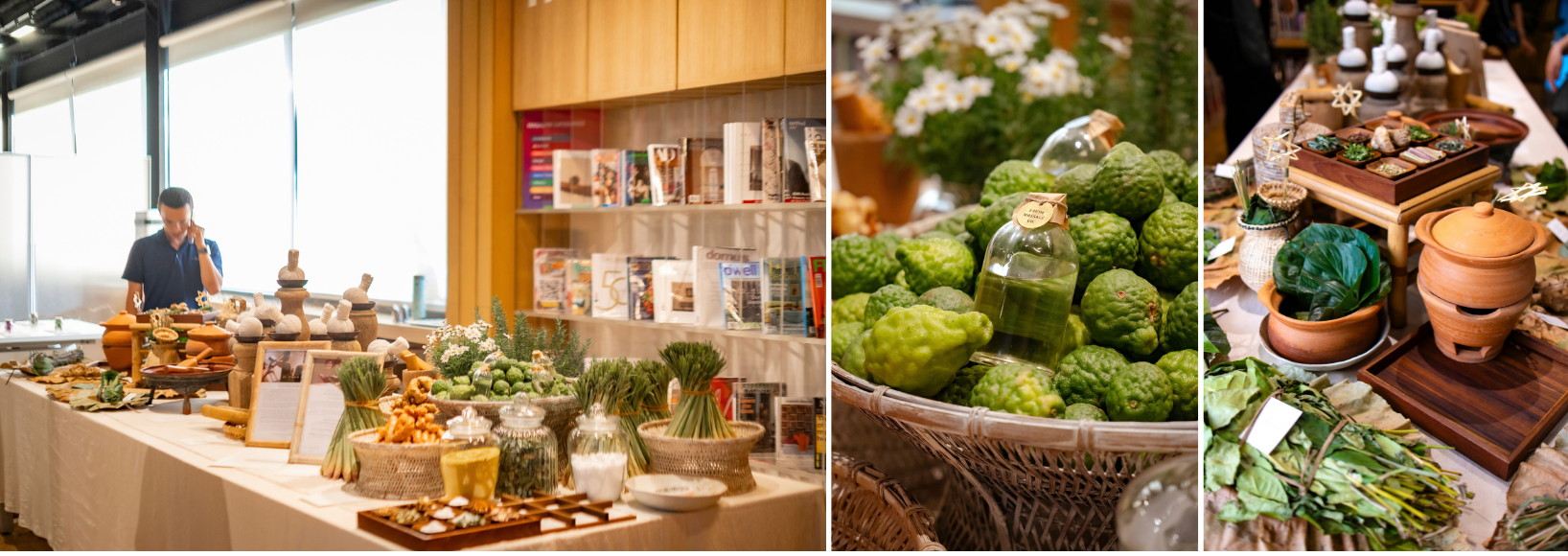
Second, we must structure the value chain effectively so that wellness does not end at spa or hotel operators. It must connect back to local farmers growing herbs, flowers, and spices, as well as handicraft groups, packaging designers, and community tourism. The key is transforming local assets into true value and economic worth—not leaving villagers selling cheap raw materials, but collaborating to generate income at multiple levels, from farming and processing to design and community tourism.
Even in wellness, design remains crucial?
Extremely crucial. We still need people to interpret and develop concepts to take them further. When designers, developers, or creators look at things from new perspectives, they help transform local herbs, flowers, spices, or produce into contemporary products, services, or experiences.
Consumers today don’t just consume the physical product; they consume the experience of using and presenting it. For instance, herbal scents don’t have to exist only in essential oils—they can be developed into sprays, beverages, packaging, or subtle service touches. This brings local raw materials to contemporary life and adds far greater value than selling raw ingredients.
Over the next 3–5 years, where do you see the opportunities in the wellness industry heading?
Globally, people are placing a clear emphasis on wellness. No matter how volatile global events or economies become, everyone wants good health, wants to avoid illness, avoids becoming a burden to their families, and wants the vitality to work and pursue what they love.
Key trends on the rise include emotional wellness, sleep wellness, and stress recovery, as people at every level face stress today. Another indispensable factor is sustainability, because consumers increasingly seek products and services that are good for their health, good for their minds, and good for the planet. Thai scents, herbs, and experiences are exceptionally well-positioned to answer these needs.
Why has “wellness” become such a buzzword recently, even though people have been interested in health for a long time?
Because wellness is now viewed as a national strategic priority. It is not just about spas or tourism; it is a health economy interwoven with daily life—from eating, sleeping, relaxing, and massage to herbal remedies and preventive care before falling ill.
Many regions are making serious moves. Chiang Mai has formed a wellness task force, while in Khon Kaen, the government, universities, and hospitals are moving quickly to develop the city into a regional health hub, attracting visitors from neighboring countries for medical and wellness services. Meanwhile, each region can leverage its own identity—whether herbs, flowers, spices, or local wisdom—because Thai wellness does not have to be one-size-fits-all; it grows from the assets of each locality.
As the Thai Spa and Wellness Association, how are you pushing this forward?
One thing we want to see is integrating wellness into basic social welfare. For example, state welfare or social security could grant Thai citizens rights to receive certified traditional Thai massage at Ministry of Public Health-accredited massage shops or spas once or twice a month, similar to dental coverage. Traditional Thai massage and therapies are not just about luxury; they can reduce long-term dependence on painkillers or anti-inflammatory drugs, benefiting public health and the nation’s healthcare budget.
To build Thai wellness into a true ecosystem, who needs to be connected?
We must connect the entire value chain—from farmers growing herbs, flowers, and spices, researchers, entrepreneurs, product designers, to spas, hotels, restaurants, tourism, and the public sector. If all parties collaborate, wellness won’t just be a destination business, but a value chain that distributes revenue back to the agricultural base and local communities.
Integration is key. Government, education, tourism, and private business must hold hands rather than work in silos. If we organize the system effectively, our existing local assets will be elevated into products, services, experiences, and a health economy that responds to global markets and national strategies.
Besides connecting the value chain, what kind of talent does the Thai wellness industry still need?
What we urgently need are “innovators”—especially people who understand local raw materials, science, processing, and experience design. Today we already have the core assets—herbs, flowers, spices, food, handicrafts, and local wisdom—but we need younger generations to help drive them further.
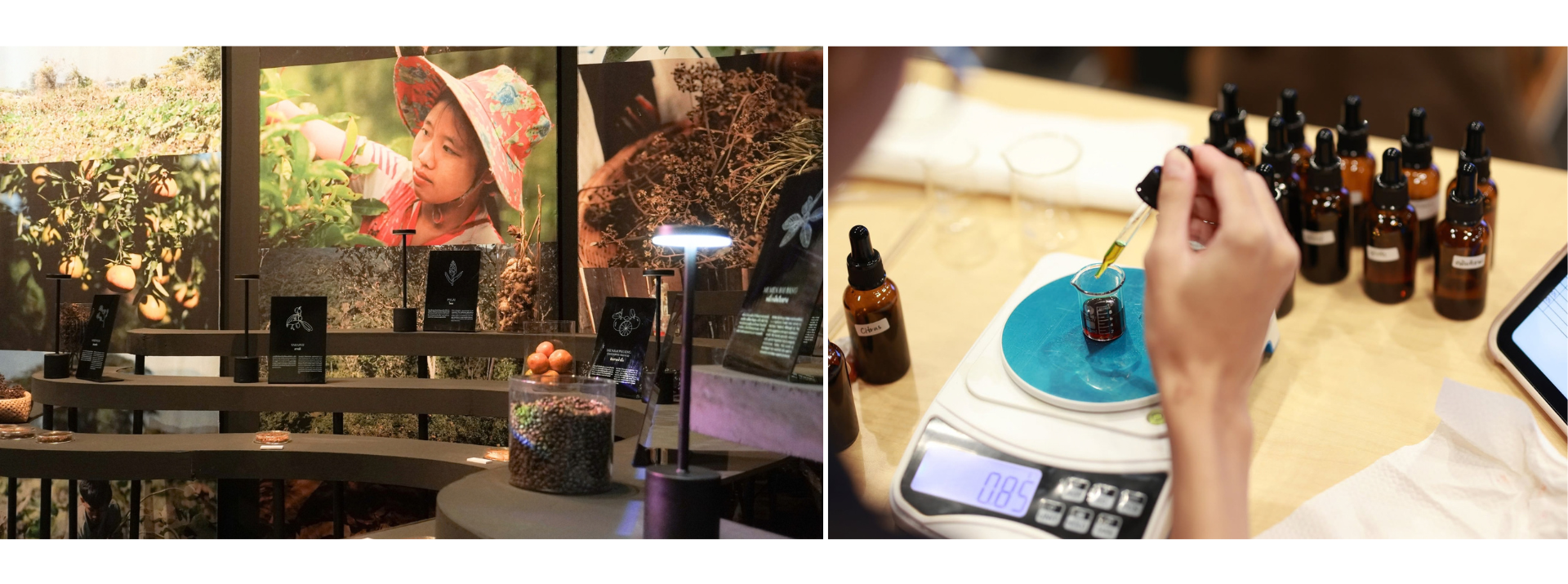
For instance, when we talk about Lanna signature scents, we must trace back to the source: do we have enough raw materials like local herbs or flowers? Are they cultivated to high quality? How well are they processed? What products or services can they become? This requires developers, technicians, designers, creators, and professionals who understand production standards.
Does that mean there are still abundant opportunities for the younger generation in the wellness market?
Absolutely. Massage and hospitality are the foundation we already possess. What we need more of is young people bringing innovation to local roots—connecting herbs, flowers, or spices with cosmetics, biotechnology, health products, aromatics, food, beverages, or travel experiences.
We have exceptional raw materials, but without people to develop them, villagers might continue selling produce by the kilogram at low prices. We want to see people who understand quality, standards, identity, and value addition, turning local capital into real income-generating products, services, and experiences for communities.
How should the education system step in to support this?
Educational institutions play a vital role. Developing wellness requires multidisciplinary knowledge—nutrition, herbal science, health sciences, design, tourism, business, and marketing. All faculties need to sit down and collaborate, rather than working in isolation.
Furthermore, learning shouldn’t be limited to four-year undergraduate degrees. It should expand into short courses, career pathways, and lifelong learning for people of all ages. This industry evolves rapidly. If we equip people with an understanding of local context, innovation, and international standards, Thai wellness will go far beyond selling raw materials or traditional services.
แชร์