SCENTING NEW POSSIBILITIES
เผยแพร่เมื่อ 11 days ago
SCENTING NEW POSSIBILITIES
From Northern Thai Scents to New Horizons
A conversation with Imhathai Kunjina, Director of the CEA Northern Regional Office, on Scents Asia 2026 and the future of fragrance in Thailand’s creative industries, from Thailand to Asia
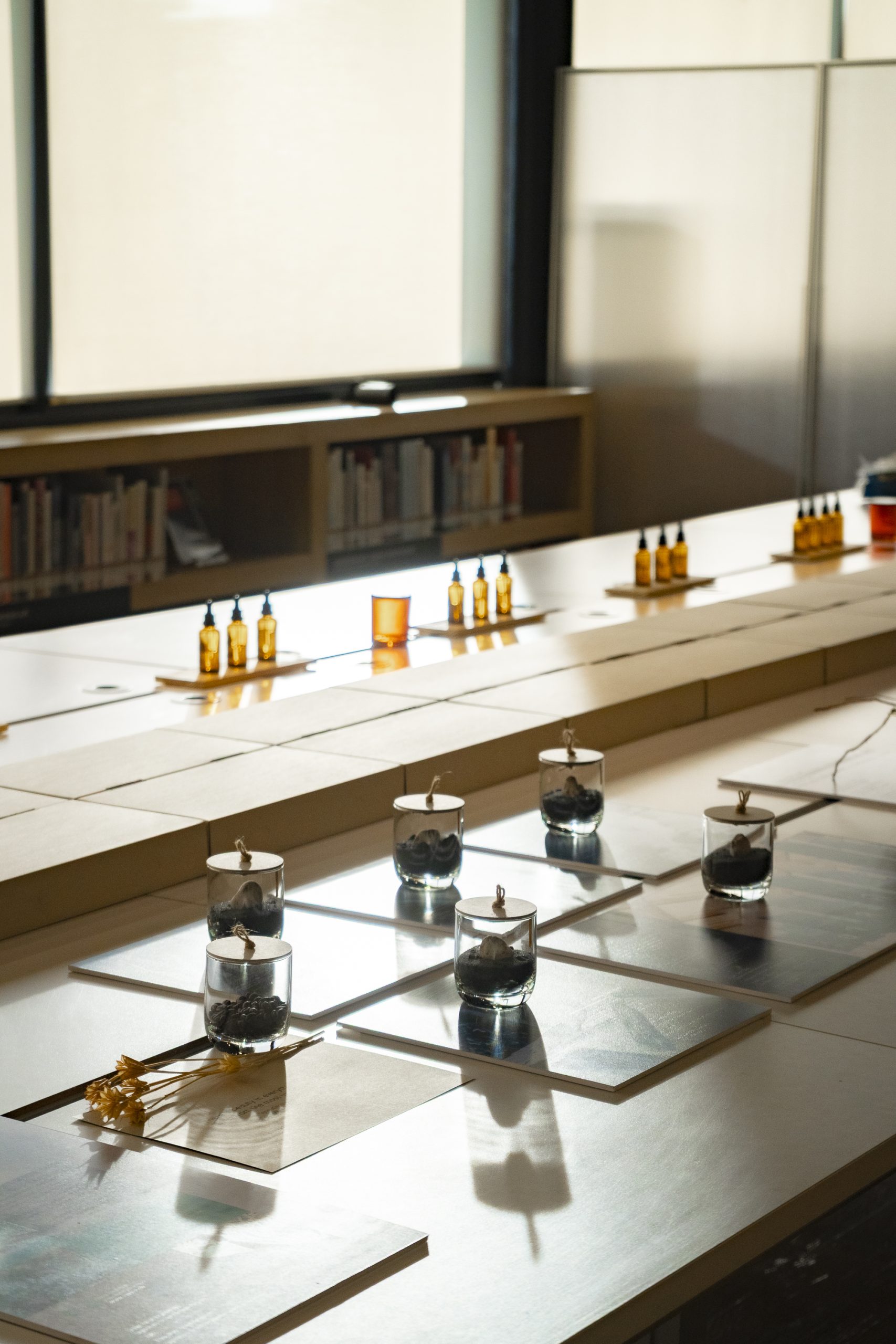
Visitors to TCDC Chiang Mai over the past year or two may have noticed a distinctive fragrance in the air.
The scent is more than a feature of the lobby or design library. It reflects a direction the Creative Economy Agency (CEA) Northern Regional Office has been steadily developing through the past two editions of Chiang Mai Design Week. Projects have included exhibitions on honey and fragrance, a perfumery competition, and panel discussions connecting businesses with research on wellbeing.
Throughout 2025 and 2026, these activities opened up new avenues for collaboration around Northern Thailand’s scents. They also brought the region’s fragrant offerings to national platforms and as far afield as Asia Perfume Show 2026, an international fragrance fair held in Paris in September. These developments have set the stage for a major milestone at this year’s festival.
That milestone is Scents Asia 2026. For the first time, the CEA Northern Regional Office is launching its own Festival Trade Fair platform as part of Chiang Mai Design Week 2026. Envisioned as a long-term initiative, Scents Asia aims to advance the creative economy through the fragrance industry.
Rooted in the cultural heritage and local raw materials of Northern Thailand, Scents Asia looks beyond the region’s entrepreneurs. As its name suggests, the platform aims to connect Thai creators and fragrance businesses with networks and markets across Asia.
How far might the fragrance of the northern land carry Thailand’s creative industries? Imhathai Kunjina, Director of the Northern Regional Office of the Creative Economy Agency (CEA), discusses the origins of Scents Asia and where the platform is headed next.
-1-
From Soil to Scent
For many years, the CEA Northern Regional Office has focused on elevating local crafts, cultural and artistic creative industries, food, and sustainability. What led you to make fragrance a core focus over the past two years?
We had actually featured scent at Chiang Mai Design Week before, though never consistently. In 2025, we connected with a network of entrepreneurs, perfumers, and an extraction laboratory working with local plants in Northern Thailand. This laboratory has gained international recognition, and it is run by a team of foreign experts who have set up their lab in Chiang Mai. We saw an opportunity to work together and develop this industry. What interests us, however, goes beyond the products themselves. We care about the grassroots economy behind them, starting from the raw materials that are extracted to create perfumes and other fragrance products.
CEA has always worked to add value to local assets, as we did with coffee, sima, and honey in previous years. The most distinctive strength of the North is its biological capital: its forests and mountains, its plants, and its natural resources.
Furthermore, scent is tied to a long value chain. It runs from product design and development to branding, experiences, spaces, and services. It also brings agriculture, craft, technology, tourism, and the wellness business together. At the same time, we continue to give equal attention to other areas, such as craft, creative cities, and different dimensions of sustainability.
So CEA sees the biodiversity of the North as capital that can be developed into products, services, and creative industries?
That is part of it. The other part is the jarit (จริต), or temperament, of northern people, meaning the things they understand, feel connected to, and have always been familiar with: nature and their way of life. We believe this local sensibility is strong and comes naturally. Local people may have relatively limited access to technology, so if we want to compete economically, we should build on what is already in place and what people here hold close.
After COVID-19, when the world went through major disruption, services and design that respond most deeply to our humanity became even more meaningful. That is why we turned our attention to the five senses. We began with taste, through local food ingredients, and then moved on to scent, which requires working with chemists and scientists. Taste and scent are where creative work meets these sciences, and that meeting point leads to real new opportunities.
___________________________________________
-2-
First Notes
Was Make Scents, Make Sense, one of the highlights of Chiang Mai Design Week 2025, the official starting point of the office’s fragrance strategy?
Before the exhibition, we worked with a network of perfumers and an extraction laboratory to hold a perfumery competition at TCDC Chiang Mai called The Sense of the Local: Collective Scents.
That year, the brief was Litsea cubeba (mountain pepper) and Arabica coffee. After the competition, we displayed the entries alongside related exhibitions. We also invited visitors to see new possibilities in natural materials and agricultural by-products from Northern Thailand that can be extracted into fragrance ingredients. This year, we held the competition for the second time, using miang (fermented tea leaves) and ya dong (Thai herbal liquor) as the brief.
As we understand it, the competition is a way to discover creators while opening new possibilities for northern raw materials.
Yes. The competition is a platform to launch and promote raw materials that reflect the identity of the region, as well as Thai fragrance brands. We want to put the North on the world map. Whenever people talk about fragrance materials or fragrance brands from Thailand, we want them to think of this place.
The competition also builds our own credibility, because being the host must have enough expertise to judge other people’s work. For the second edition, Make Scents, Make Sense 2026: Craft Perfumery Design Award, which will likely be renamed the Scents Asia Awards in the future, we invited a lecturer from a perfumery school, a perfumer with more than 20 years of experience, and writers and influencers from France and Korea who follow the global perfume scene. They joined experts from Thailand on the judging panel. (The full list of judges is available at https://www.facebook.com/TCDCChiangMai/posts/1474060568093805/)
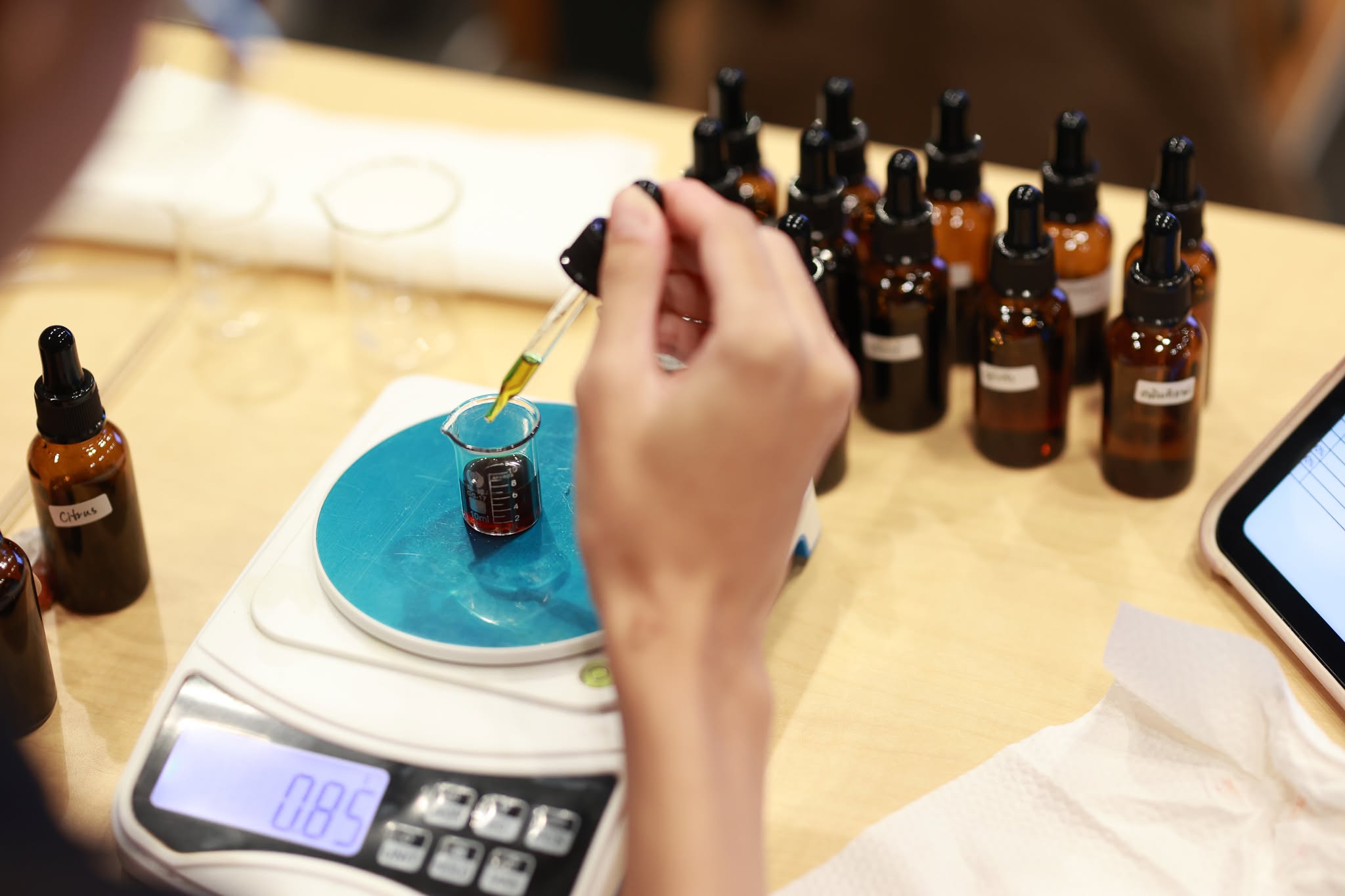
This year, alongside the second competition, there were panel discussions with businesses and academic institutions specialising in extraction and perfumery. What concrete results has this work produced?
We knew we were on the right track from the first year. Thai and international perfumers travelled here to compete, and after the Make Scents, Make Sense exhibition, perfumers across ASEAN began to take an interest.
In the second year, we invited Rémi Lantieri-Jullien, a perfume expert, writer, and founder of the platform ScentedWeb (scentedweb.com), to serve as a judge. That opened a window for the French perfume world, in the birthplace of modern perfumery, to see what we were doing. Eventually, NEZ (bynez.com), a specialist magazine on scent, reached out to us and gave us the opportunity to present works from the competition at Asia Perfume Show 2026 in Paris, held from 23 to 25 September 2026.
___________________________________________
-3-
Beyond Borders
So the second perfumery competition took works from Chiang Mai all the way to the world’s perfume capital.
Our original plan was to take the works of the 20 finalists, the three winners, and the People’s Choice winner on tour to events around Thailand. We had just been to Chiang Rai. Being invited to Paris went far beyond what we had expected.
How was the response?
Asia Perfume Show is an international perfume fair dedicated to Asian perfumery. It takes place in Paris and is organised by NEZ, Notes Shanghai, and a network of international perfumers. We exhibited this year’s works made with miang and ya dong, along with last year’s works made with coffee and Litsea cubeba. Compared with other exhibitors from across Asia, we were still a very small presence. It was still a valuable chance to introduce northern raw materials on an international stage, and to let people from around the world smell our herbs, including ya dong, which took quite a bit of explaining. (smiles)
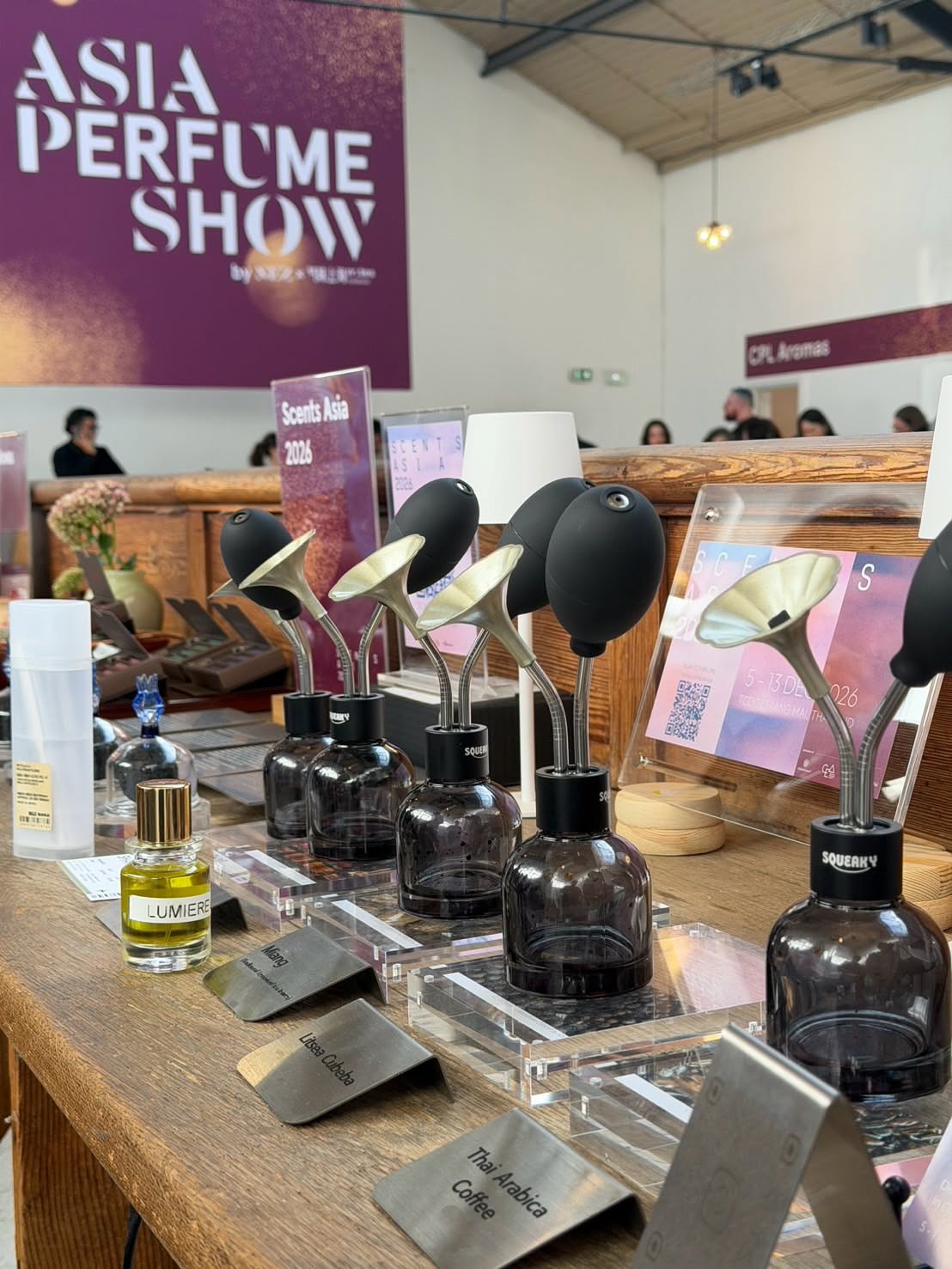
From your perspective, after bringing perfumes made by Thai creators from Thai raw materials to Paris, do you see an opportunity for our local products to reach the global market?
There is an opportunity, but we need to learn, develop, and communicate much more. That includes the supply of raw materials for extraction, marketing, technology, government support, and more. This trip to Paris was a first test of the waters. It showed how diverse the resources of Chiang Mai and Thailand are, and it gave us a chance to reflect on ourselves. We have to admit that we have only been running this for two years, and the raw materials we have chosen for extraction are still at the experimental stage. Everything is still very new.
After returning from Paris, the CEA Northern Regional Office brought the competition works to COSMEX 2026. How was that event different from Paris?
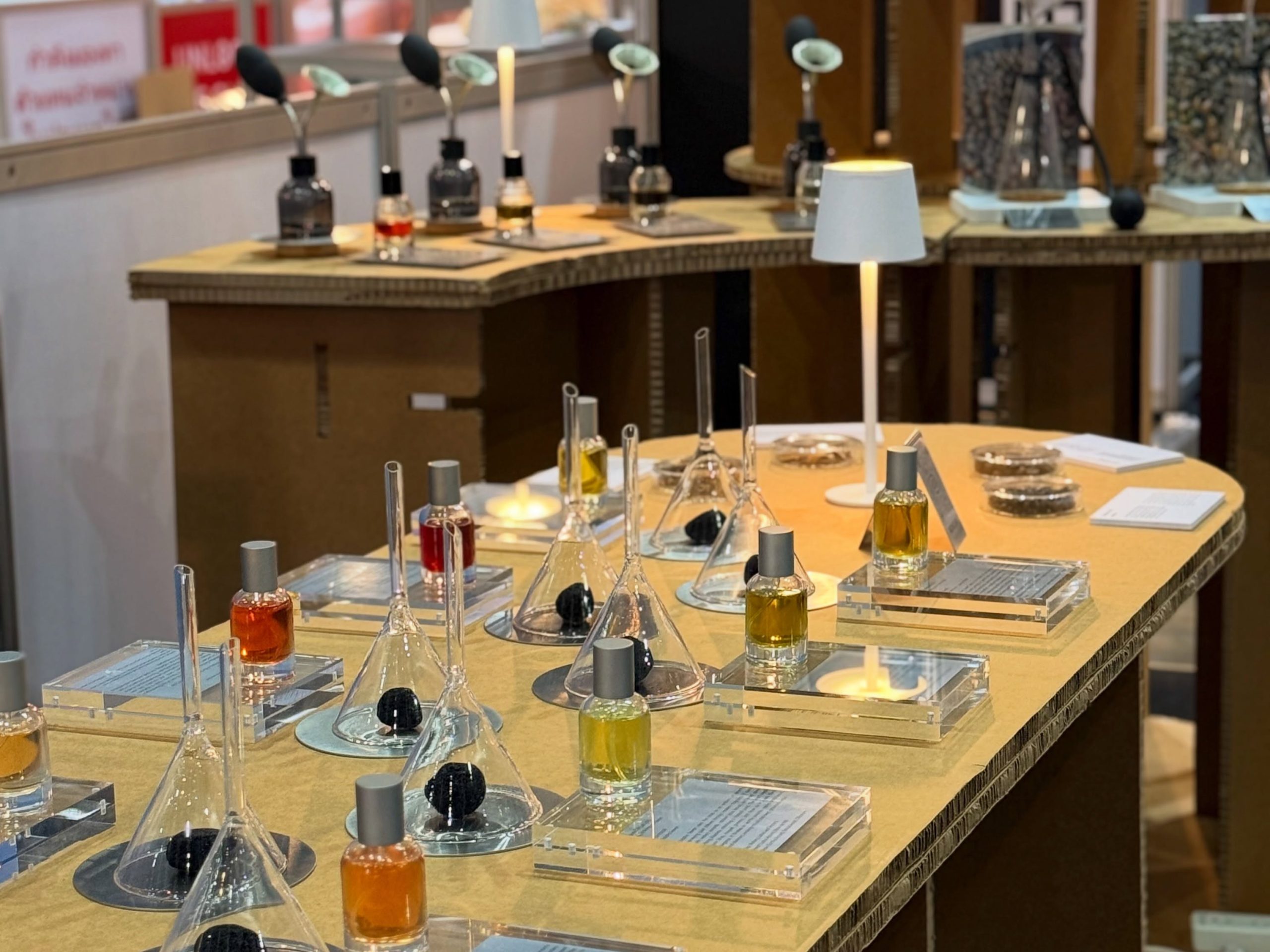
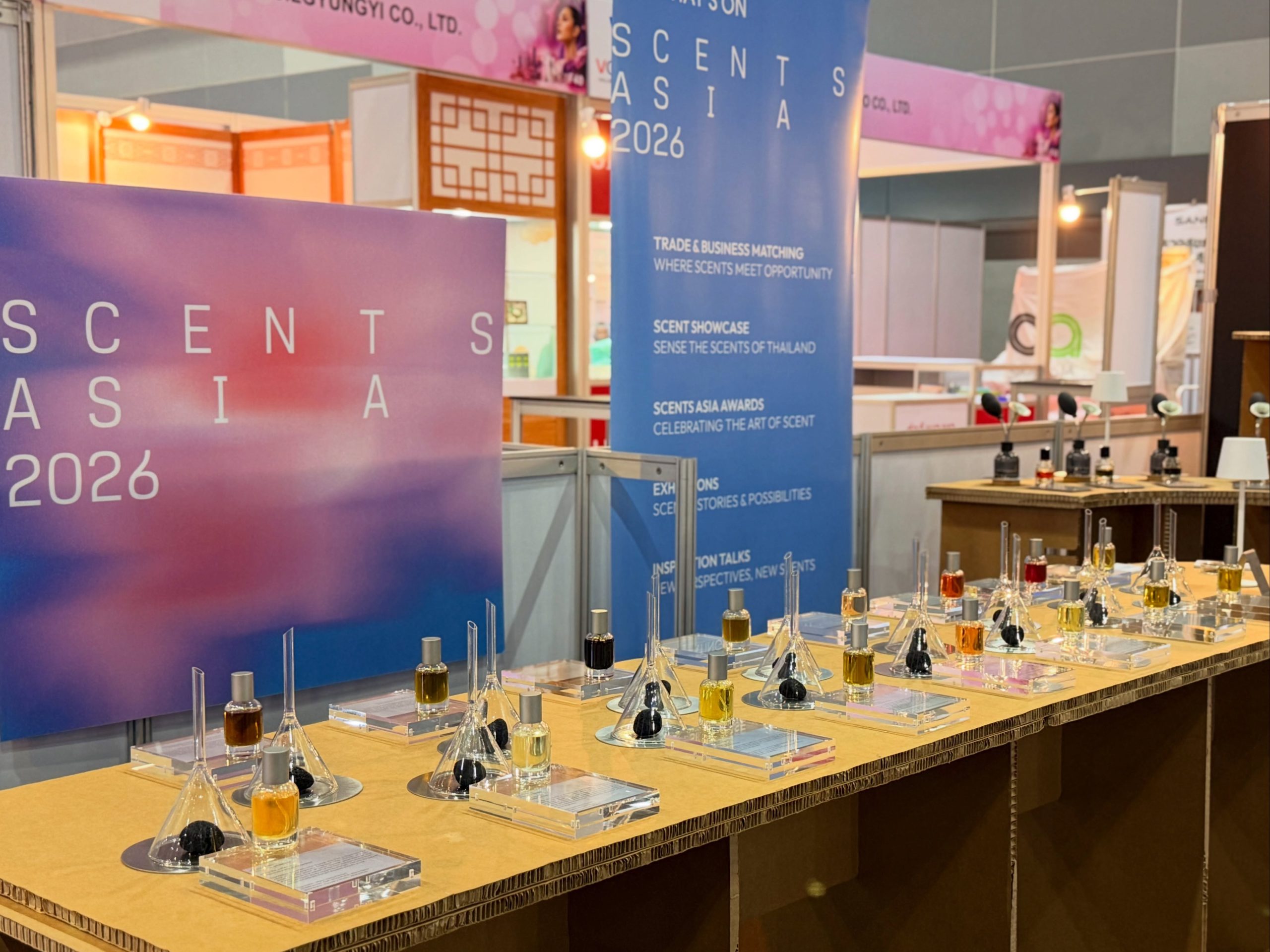
We have just come back from it. The Paris fair focused mainly on perfume makers. COSMEX 2026, held at BITEC Bangna, covers the entire beauty industry, from cosmetics and skincare to body care and dietary supplements. That fits our direction better. CEA may run a perfumery competition, but our real goal goes beyond the perfume bottle. We are aiming for many forms of fragrance products extracted from northern raw materials.
We received a very positive response. Representatives from cosmetics brands in Japan and Vietnam, as well as a Russian perfume brand based in Thailand, were interested in using the finished scents in their own products. Entrepreneurs building new brands around 100% natural ingredients also approached the perfumers in our programme to explore how they could develop products together.
Holding the event there also led several international representatives to travel on to Chiang Mai to explore the raw materials, brands, and the overall industry for themselves. In that sense, it opened another door of opportunity for the region.
___________________________________________
-4-
Scents Asia 2026
Scents Asia 2026, which launches at Chiang Mai Design Week this year, is the concrete outcome of nearly two years of CEA’s work on scent. Did the project grow out of the fairs in Paris and Bangkok?
Make Scents, Make Sense was the main exhibition of last year’s festival. Scents Asia 2026 is different. It takes the form of a Festival Trade Fair, which goes beyond showcasing works. It is a place where creators and scent businesses can meet, strengthening the ecosystem of this industry, with Chiang Mai, a city rich in natural raw materials, at its centre.
Another key driver is the growth of the Thai perfume industry over the past few years. This growth has shown us its connections with other scent-related products, such as cosmetics, home fragrance, functional fragrance for wellbeing, and more. All of these rely on natural and agricultural raw materials. Scents Asia was created to expand new possibilities for local scent-related raw materials across a range of industries and into Asian markets.
We decided to act for two reasons. First, to reduce costs for Thai entrepreneurs who would otherwise have to travel abroad to exhibit. Second, to create a space where buyers and producers can experience the real thing. Scent is harder to communicate than food. It needs tangible explanations, and people need to smell it for themselves.
The event takes place in Chiang Mai, so why call it Scents Asia rather than Scents Chiang Mai or Scents Thailand?
We debated this for a long time. Once we chose the name, many of our international friends in the scent industry messaged us privately. (laughs) In truth, Thailand is barely known in the scent world. Choosing Chiang Mai would narrow our scope even further, so we used neither Thailand nor Chiang Mai.
We chose the name Scents Asia to highlight the potential and diversity of our local raw materials, our people, and the trends in an industry that can grow internationally. The word “Asia” is neutral and open. It conveys the scale of the opportunity more clearly, from Northern Thailand and Thailand to connections across the Asian region.
As I mentioned, Scents Asia is not designed solely for perfumers or the perfume industry. We are talking about creative work that uses scent as a tool to communicate and to create value for products and brands.
Could you explain what you mean by a Festival Trade Fair?
It sits between a festival and a trade fair. There are booths, business matching, and creative activities. We do not simply open the space to anyone who wants to sell. We curate exhibitions and panel discussions carefully, and we present research without any commercial expectations, simply to show that something new is happening. That said, if any of these works go on to partner with a brand, we would consider that the greatest success. In the bigger picture, Chiang Mai Design Week plays the role of the festival, while Scents Asia moves towards a more serious fair.
The content covers perfume, home fragrance, and functional scents that affect both body and mind. To be honest, we lean slightly towards the last group, because it is supported by the government’s Wellness Economy policy. Businesses and provinces across the North have long wanted to drive this agenda. The mix of participants is designed to offer an early glimpse of what the region’s Sensory Economy for Wellbeing might look like.
What will visitors to Chiang Mai Design Week find at Scents Asia 2026 this year?
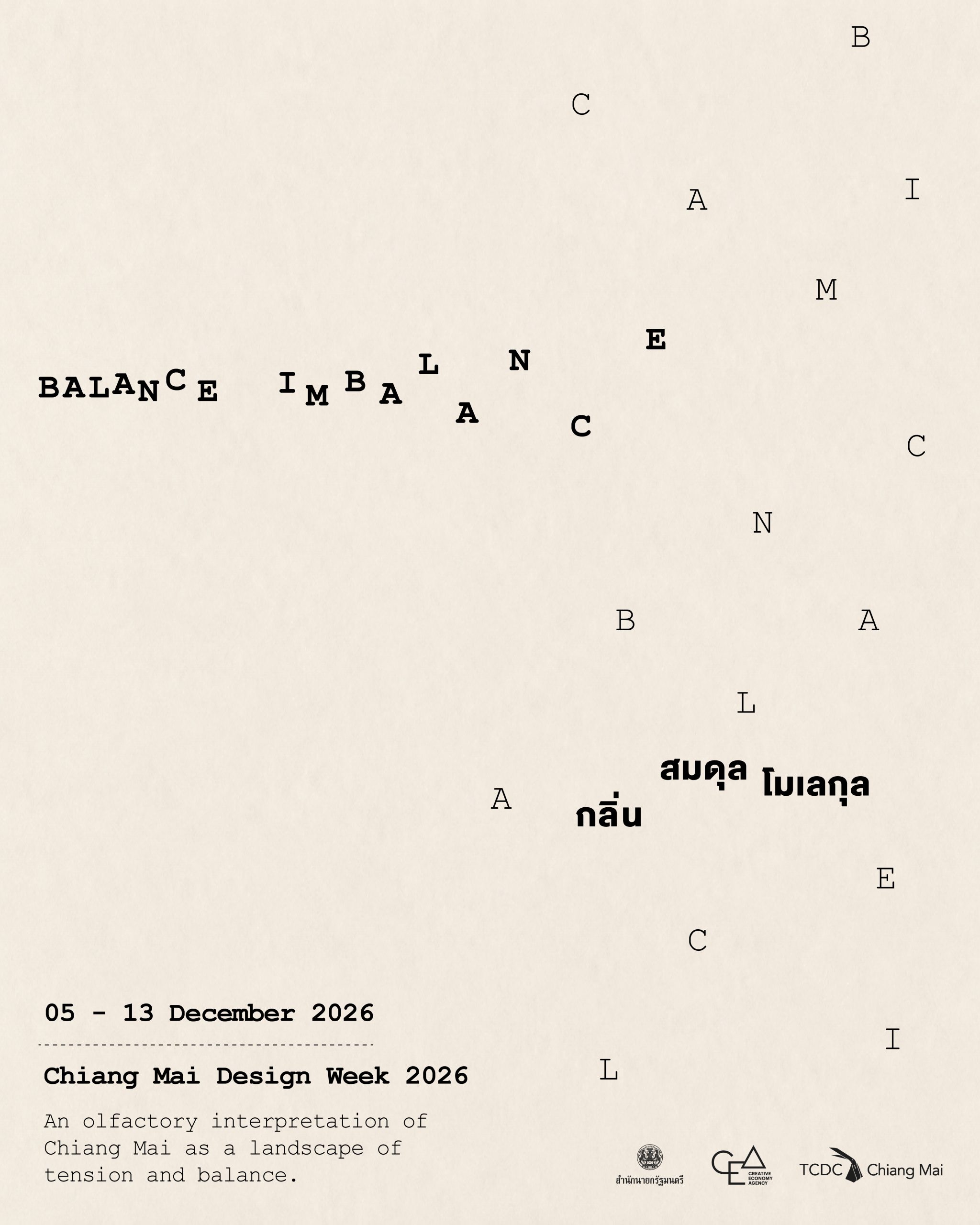
Scents Asia 2026 is one of the highlights of the festival. It runs from 5 to 13 December 2026 at TCDC Chiang Mai. The main building focuses on perfume, home fragrance, functional scents, and some cosmetics. The Federation of Thai Spa and Wellness Association will also have a dedicated area. This completes the picture of the scent business in the North and across Thailand, and it connects spa operators with perfumers and fragrance brands.
A pavilion on the front lawn will invite food and beverage businesses to experiment with scent in their menus. The smaller building, home to the Sri Lanna Thai Women’s Cultural Promotion Association of Chiang Mai, will host booths from craft groups, product designers, and print studios that use scent as part of their work.
On the business side, roughly 30–40% of the event is B2B and about 60% is B2C. The fifth and sixth of December are Business Days. During the day, buyers can negotiate and network. In the evening, the booths open to the public, and from then on the event becomes a full retail fair. The Market Insight stage runs throughout all nine days. In the coming years, we intend to give more weight to B2B and develop Scents Asia into a full-scale fair held on a regular basis.
So it is intended as a long-term programme.
Absolutely. Scents Asia will be a key mechanism for advancing our Sensory Economy for Wellbeing strategy, which uses local assets through the senses to create wellbeing. It will run alongside other sensory activities. For now, the core team consists of staff from the CEA Northern Regional Office working with partner networks. In the future, the platform will separate from Chiang Mai Design Week and become an independent initiative with its own dedicated team.
Finally, what does the CEA Northern Regional Office hope to see from Scents Asia?
As I said at the beginning, our ultimate goal is to strengthen the creative economy at the regional level. Creativity is a national asset. We want this asset to be accessible to everyone, so that the grassroots economy in each region can grow from what it already has. For example, we want the rich raw materials of the North to be used more widely and to gain greater cultural and economic value than they have today. This applies to fragrance businesses and to every business related to the five senses.
We see the North as the first opportunity. If we succeed here, we can extend the model to farmers in other regions as well.
The first picture I want to see right now is people from the global scent industry flying directly to Chiang Mai to source raw materials and to collaborate with local and Thai brands. We want everyone to know that if they are looking for fragrance from Asia, they can come straight to Chiang Mai. This city offers more than raw materials. It also has the people, the networks, and the technology to support them.
This is what we are working towards, and we will continue to build partnerships with the public and private sectors, farmer networks, researchers, academic institutions, and everyone involved.
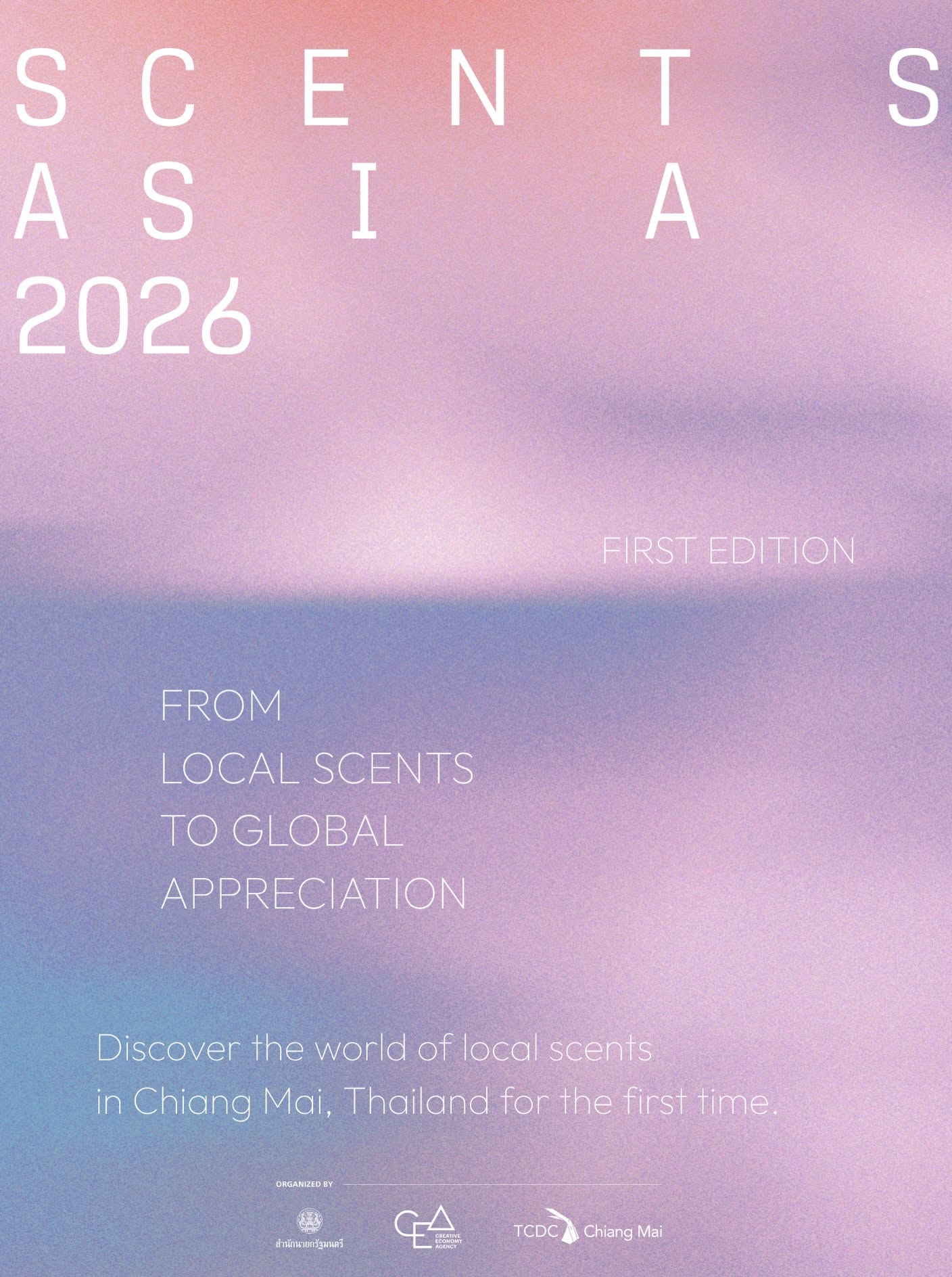
Discover Scents Asia 2026, the first scent-focused Festival Trade Fair from the CEA Northern Regional Office. It brings together fragrant local raw materials, perfumers, fragrance brands, and buyers from Thailand and abroad in one place. Scents Asia 2026 is one of the highlights of Chiang Mai Design Week 2026, taking place from 5 to 13 December 2026 at TCDC Chiang Mai.
For updates, visit www.cea.or.th and follow scents.asiaon Instagram.
แชร์